
Road bike bell · Guide: Function without a cluttered cockpit.
A good road bike bell should be reliably noticeable, easy to reach from your riding position and compatible with your cockpit — without unnecessarily affecting its operation or appearance. What options are there, and what really matters?
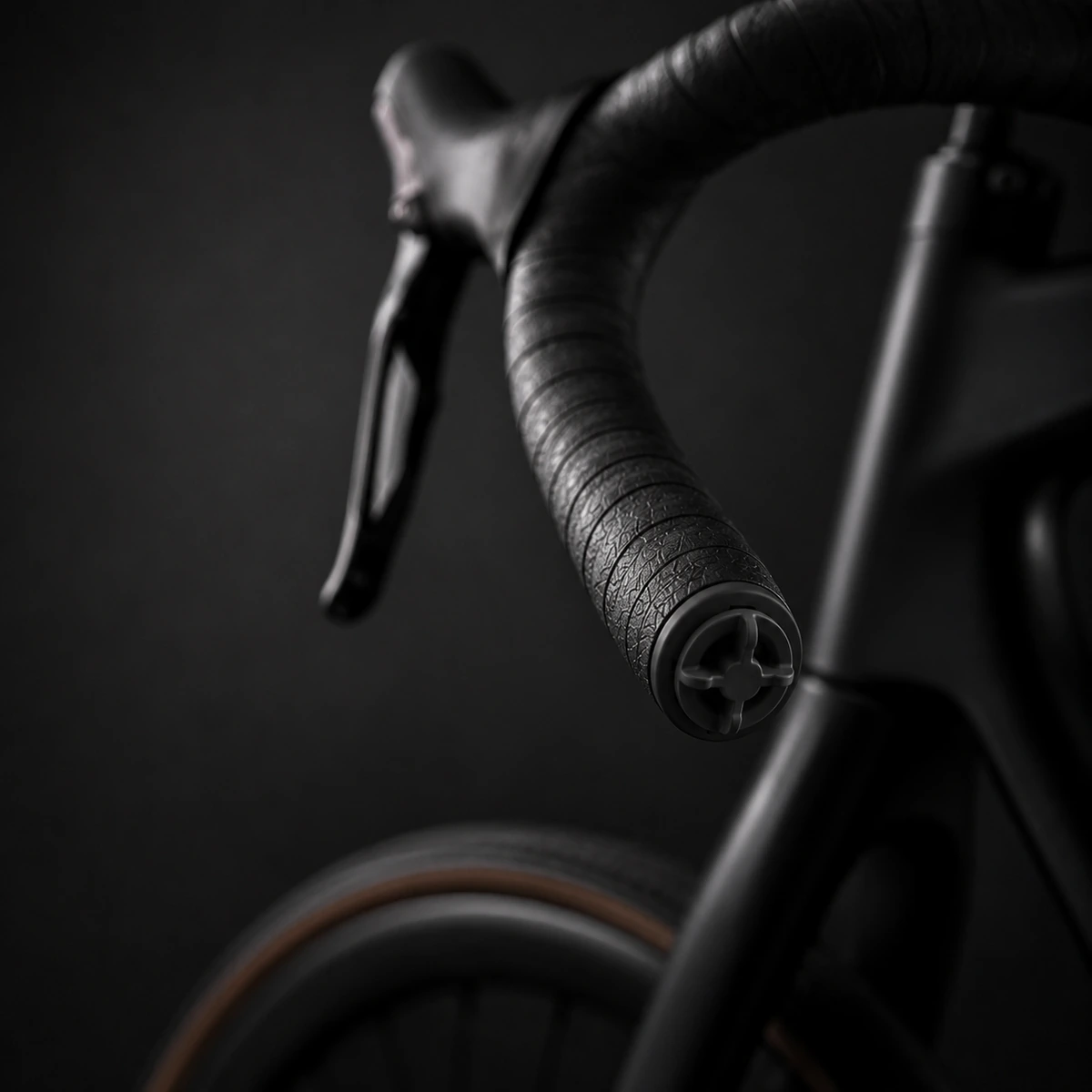
The challenge
Why finding the right road bike bell isn’t that simple.
Road bike accessories are chosen carefully. The cockpit should stay uncluttered, components should work together, and a bell still needs to be easy to reach when it matters. This is where function and appearance often pull in different directions.
Limited space
Modern cockpits and integrated cables leave little room for extra components.
Easy reach
A bell is of little use if it’s awkward to operate while riding.
Clean appearance
On a road bike in particular, visibly mounted accessories can change a deliberately minimal cockpit.
Different handlebars
Shape, internal diameter and construction vary — integration adds further requirements.
Requirements
What a good road bike bell should do.
Noticeability
The signal needs to stand out reliably in real traffic conditions.
Ease of use
The control should be intuitive to reach, without unnecessary movements.
Integration
A solution should fit into the bike as naturally as possible.
Installation
Fitting it should be understandable and as straightforward as possible.
Compatibility
Handlebars vary — an integrated solution needs to account for those differences.
Solutions
What bell options are there for road bikes?
Not every solution takes the same approach. Different concepts have their place, depending on the bike, cockpit and your personal priorities.
Traditional handlebar bell
On the handlebar
Visible on the handlebar
Simple, proven and easy to reach — but visibly mounted on the handlebar.
A good fit if a straightforward, easy-to-reach solution matters more to you than discreet integration.
Compact bell
On the handlebar or stem
Less visible
More minimal than traditional models, but still visible as an extra component on the cockpit.
A good fit if you want to use a small amount of cockpit space and are happy with a visibly mounted bell.
Cockpit or mount-based solution
On the cockpit or mounting system
Depends on the system
Uses an existing cockpit or mounting system. Whether this works depends on the particular system.
A good fit if you already use a compatible cockpit or mounting system and want to integrate the bell into it as discreetly as possible.
Handlebar-end solution
Inside or at the handlebar end
Barely visible
Can make the cockpit look much cleaner. Handlebar shape, installation space and compatibility become more important.
A good fit if a clean cockpit matters to you and your handlebar is suitable for this type of solution.
Traditional handlebar bell
- Position
- On the handlebar
- Visibility
- Visible on the handlebar
Simple, proven and easy to reach — but visibly mounted on the handlebar.
A good fit if a straightforward, easy-to-reach solution matters more to you than discreet integration.
Compact bell
- Position
- On the handlebar or stem
- Visibility
- Less visible
More minimal than traditional models, but still visible as an extra component on the cockpit.
A good fit if you want to use a small amount of cockpit space and are happy with a visibly mounted bell.
Cockpit or mount-based solution
- Position
- On the cockpit or mounting system
- Visibility
- Depends on the system
Uses an existing cockpit or mounting system. Whether this works depends on the particular system.
A good fit if you already use a compatible cockpit or mounting system and want to integrate the bell into it as discreetly as possible.
Handlebar-end solution
- Position
- Inside or at the handlebar end
- Visibility
- Barely visible
Can make the cockpit look much cleaner. Handlebar shape, installation space and compatibility become more important.
A good fit if a clean cockpit matters to you and your handlebar is suitable for this type of solution.
Mechanical or electric?
Regardless of its shape, there’s a second question: how is the signal produced?
Mechanical signalling
The signal is produced by a mechanical striking, spring or bell mechanism and requires no additional power source.
Electric signalling
The signal is generated electronically. Depending on the design, this allows different ways of triggering and shaping the signal, but requires a power source and additional electronics.
Noticeability
When a bell should work without taking centre stage.
Modern road bikes increasingly integrate cockpits, cables and components. The challenge is to make a functional bell feel just as natural within that overall design.
A good signal needs to be more than loud. It needs to be noticed.
How well a signal is noticed doesn’t depend on a single dB figure. Tone, surroundings and the type of signal matter too. That’s why loudness shouldn’t be the only consideration when choosing a good bell.
clango
clango is being developed to resolve this tension.
The idea: bring clear signals and a clean cockpit together so the bell fits into the bike as naturally as possible.
Inside your handlebar.
Not on it.
clango is an integrated electric bike bell that sits inside the handlebar end and sounds at the press of a button. The product is currently in development.

Stay up to date.
Get updates on clango’s availability and launch.